Driveway Installation in Worcestershire
A new driveway that adds kerb appeal, eliminates flooding, and increases your property value — designed around your home and installed to last decades.
Hundreds of driveways installed across Worcestershire — every one still performing years later.
What Goes Into a Professional Driveway Installation?
A professional driveway installation involves far more than laying a surface material. It begins with excavation of the existing surface to a depth of 200–300mm, followed by formation of a compacted sub-base, installation of edge restraints, and finally the laying of your chosen surface — whether that is block paving, resin bound aggregate, tarmac, or natural stone.
Drainage is a critical consideration. Under current SUDS (Sustainable Urban Drainage Systems) regulations, any new impermeable driveway covering more than 5 square metres at the front of a property requires either planning permission or the use of permeable materials that allow rainwater to drain naturally. We ensure full compliance with these regulations on every project.
You need a new driveway when your existing surface is cracking, sinking, flooding, growing weeds through the joints, or simply looks tired and dated. A professionally installed driveway transforms the front of your property and typically adds £5,000–£15,000 to its market value.
Professional installation matters because the lifespan of any driveway is determined by what is underneath, not on top. Without correct excavation depth, compacted sub-base, and proper drainage, even the best surface material will sink, shift, and fail within 5–10 years.
What Goes Wrong with DIY and Budget Driveways
Insufficient excavation depth. The most common shortcut is inadequate dig-out. A proper driveway needs 200–300mm of compacted sub-base. Budget contractors often lay just 50–100mm, which leads to settlement, sinking, and surface failure within 2–5 years — especially in areas with heavy vehicle loading.
No edge restraint. Without properly secured edge restraints (either concrete haunching or kerb edging), block paving spreads outward under vehicle weight. Within 12–18 months, you see widening joint gaps, displaced blocks, and uneven surfaces. Resetting without edge restraint is throwing money away.
Drainage problems worsen. A poorly drained driveway channels water towards your property rather than away from it. This causes foundation damp, flooded garages, and waterlogged gardens. Retrospective drainage installation — breaking up and relaying sections of an existing driveway — costs 3–4 times more than doing it correctly from the start.
Weed growth signals failure. Weeds growing through a relatively new driveway are a sign that the sub-base and membrane were not properly installed. By the time weeds appear, the underlying structure has already been compromised.
The most common mistake homeowners make is choosing a contractor based solely on the lowest quote without asking about excavation depth, sub-base specification, and edge restraint. The cheapest driveway quote is almost always the most expensive long-term.
How We Build Your Driveway
Site Survey & Design
We visit your property, measure the area, discuss your requirements and preferences, and advise on materials, patterns, and drainage solutions. You receive a detailed plan.
Written Estimate
A clear, itemised quote covering excavation, sub-base, materials, edge restraints, drainage, and all labour — with no hidden extras.
Excavation & Ground Preparation
We excavate to the required depth (typically 200–300mm), install a geotextile membrane to prevent weed growth, and compact a Type 1 MOT sub-base in layers using a plate compactor.
Edge Restraints & Drainage
Concrete edge restraints or kerbing are installed around the perimeter. Drainage channels, ACO drains, or soakaways are incorporated where required.
Surface Installation
Your chosen surface material is laid to the agreed pattern and specification — whether block paving, resin, tarmac, or natural stone. Cuts are made accurately with diamond blade equipment.
Finishing & Handover
Joints are filled (kiln-dried sand for block paving, natural aggregate for resin), the area is compacted, cleaned, and you receive your written guarantee and care instructions.
Why Homeowners Choose Keystone for Driveways
Engineered Sub-Base
Every driveway starts with 200–300mm of compacted Type 1 MOT — the foundation that prevents sinking and movement.
Long-Life Materials
We use high-quality blocks, aggregates, and resins that withstand vehicle loading, frost, and UV without fading or crumbling.
Vehicle-Grade Construction
Built to handle multiple vehicles, daily use, and heavy loads — not just foot traffic.
Adds Property Value
A well-installed driveway adds £5,000–£15,000 to a property's market value and dramatically improves first impressions.
Regulation Compliant
All driveways comply with SUDS drainage regulations. We handle permeable options and planning considerations.
Design Flexibility
Wide range of colours, patterns, and materials to complement your property's style — from traditional herringbone to contemporary resin.
Driveway Materials: Block Paving, Resin, Tarmac & Stone
Block Paving
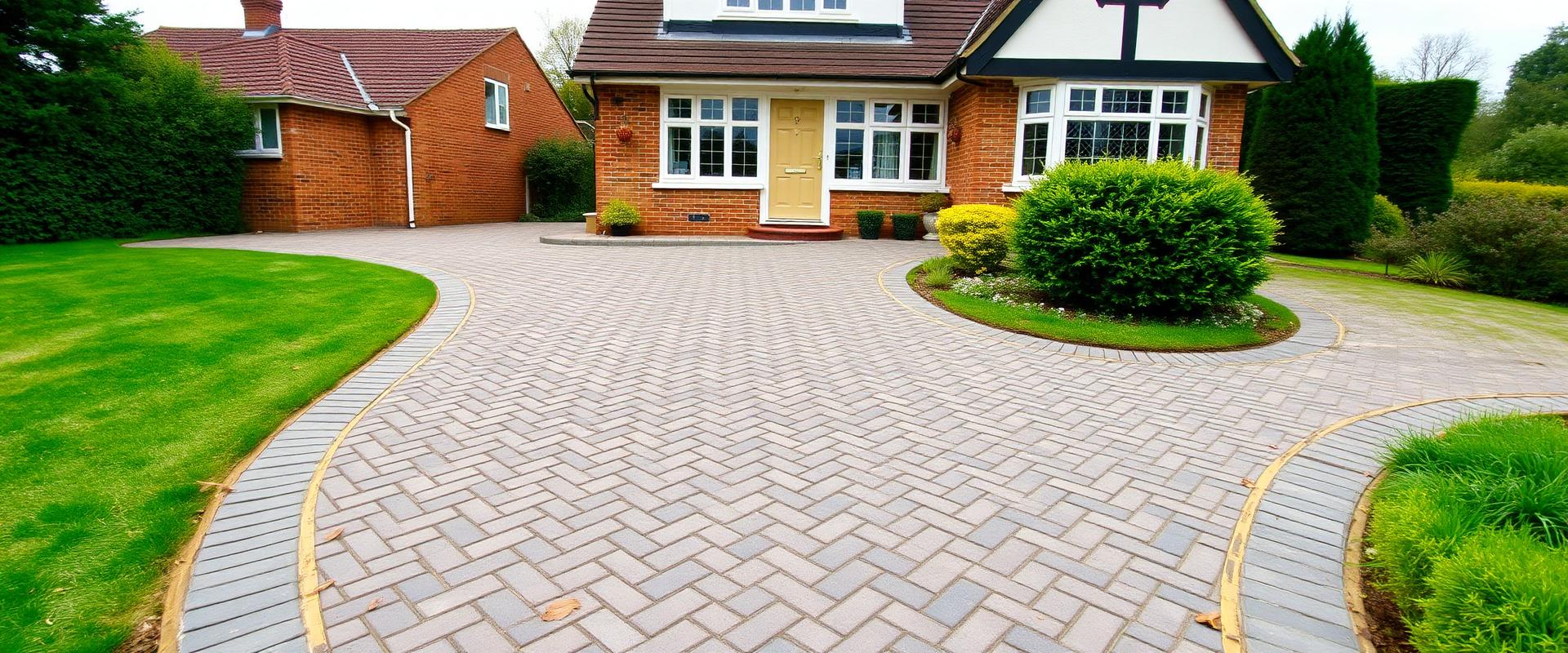
Block paving is the most popular driveway surface in the UK. Individual concrete or clay blocks are laid in interlocking patterns — herringbone, basketweave, stretcher bond — on a compacted sand laying course. Block paving is durable (40+ year lifespan), repairable (individual blocks can be replaced), and available in a wide range of colours and finishes.
We install Marshall's, Bradstone, and Tobermore block paving products as standard — all backed by manufacturer guarantees.
Resin Bound Driveways
Resin bound surfacing combines natural aggregate with clear UV-stable resin, trowelled onto a prepared base to create a smooth, permeable, weed-resistant surface. It is one of the most visually striking options available and is inherently SUDS-compliant as water drains directly through the surface.
Resin bound driveways are available in a wide range of natural stone colours and can incorporate design features such as border contrasts and logo inlays.
Tarmac Driveways
Tarmac (macadam) remains a cost-effective, hard-wearing option for driveways. Modern tarmac is machine-laid and compacted to create a smooth, durable surface with a lifespan of 15–25 years. We install both standard black tarmac and red tarmac finishes, with block paving border edging for a more premium appearance.
Indian Stone & Natural Stone
For a premium finish, natural stone — particularly Indian sandstone — offers unique character and colour variation. Each slab is individually laid on a full mortar bed, creating a surface that is both beautiful and incredibly hard-wearing. We also install granite setts, limestone, and porcelain paving for driveways and patio areas.
Permeable Options
If your project requires SUDS compliance, we offer permeable block paving (with widened joints and permeable sub-base), resin bound surfacing, and gravel grid systems — all designed to manage surface water runoff without the need for separate drainage infrastructure.
Residential vs Commercial
We install driveways for private homes and also handle commercial projects including car parks, access roads, and forecourts. Commercial projects typically require heavier sub-base construction and may involve different surface specifications. Contact us to discuss your commercial requirements.
Frequently Asked Questions
Related Services
Areas We Serve
Transform the Front of Your Home
Get a free driveway design consultation and written estimate — no obligation, no pressure.